
February 06, 2020
February 03, 2020
Nitrogen Response, Uptake and Use Efficiency of Spring Wheat Cultivars


One of the most common questions asked by wheat producers is how to manage nitrogen (N) fertilizer depending on what variety they chose to grow. Previous work has shown that wheat cultivars may vary in N requirements, N uptake, and N use efficiency (NUE).
One of the main reasons why many producers like to plant older varieties is the fact that they are very familiar with them, even though they may be substantially lower yielding, may not have the best grain quality and may not perform as well under various biotic and abiotic stresses associated with disease, water or nutrient limitations or pest or weed pressure.
Increasing the knowledge about newly released varieties will help to improve the adaption of these varieties by growers.
The following data were collected from the research area (a dedicated 0.2 m2 section within each plot) at Feekes 5, and Feekes 10:
- plant height (by measuring height of 10 randomly selected plants per plot)
- chlorophyll content estimate (using SPAD meter)
- biomass production estimate- as Normalized Difference Vegetative Index (NDVI, using GreenSeeker handheld optical sensor)
- biomass weight (by hand-harvesting all above ground biomass within the 0.2 m2 area)
- biomass N content (laboratory analysis)
- biomass N content and final grain yield were estimated using multispectral camera mounted on a UAV
The performance of each variety was evaluated using multispectral camera mounted on a UAV
At maturity, the following data was obtained:
crop yield – preliminary results are reported in Figure 1.
grain nutrient content (grain will be analyzed for N content) – newly purchased Perten Grain Analyzer will be utilized.
Wheat grain quality will be assessed: 1) baking quality analysis (mixing time, water absorption, loaf volume, crumb grain score), 2) solvent retention capacity (SRC) will be carried out at the University of Idaho Wheat Quality Lab, 3) viscosity (Hageberg Falling Number test) will be performed at the Aberdeen R&E Center lab.
OBJECTIVES:
- To assess response of newest University of Idaho, other best-performing wheat cultivars, and traditional “check” varieties to N, to quantify their N uptake magnitude and its’ pattern throughout the growing season, and NUE, and
- To evaluate N uptake and NUE of spring wheat varieties currently tested in extension nurseries using ground- and aerial-based data.


Nutrient Management for Wheat
Improving Nutrient Management for Wheat
through Comprehensive Soil and Crop Survey
Olga S. Walsh, and Jordan R. McClintick-Chess, University of Idaho, Plant Sciences Department
Sanaz Shafian,University of Idaho, Department of Soil and Water Systems,
Juliet Marshall,University of Idaho, Department of Entomology, Plant Pathology and Nematology


Soil testing is a necessary component of successful and sustainable soil nutrient management for crop producers. Proper soil testing is essential to ensure optimal fertilizer usage resulting in maximum economic and agronomic returns with minimal environmental impact.
Local growers, extension educators, and crop consultants have expressed the need for enhancing their knowledge of sustainable soil nutrient management by boosting their understanding of soil sampling/testing. Despite substantial educational efforts, many growers do not test their soil’s fertility on a regular basis. This is especially true for many wheat growers in southern Idaho, where other crops such as potatoes produce the highest revenue, and nutrient management for wheat is often overlooked.
Improving grower understanding of on-farm soil fertility and soil residual nutrient levels as well as being aware of what kind of response can be expected from N and P fertilizer application are key to making informed and wise nutrient management decisions.
OBJECTIVE: To illustrate response of wheat to N and P fertilizer.

Nitrogen (P) and phosphorus (P) response plots were established at the University of Idaho Parma R&E Center. On April 3, 2019, soft white spring wheat (Seahawk) was planted with H&N Equipment small plot drill using 276 plants m2 seeding rate. At planting, 5 N 5 P levels were applied, each treatment was replicated 3 times. The research plots were hand-harvested on August 22, 2019, and data on wheat biomass and grain production was analyzed. Grain production was calculated as a product of kernels head-1 and kernel weight. The Duncan's Multiple Range Test was used in the SAS 9.4 statistical software to determine the differences between treatments at the 95% confidence level.


In general, plant height increased with increased N rates. Plant height was optimized at 250 lb N ac-1, increasing N rate to 300 lb ac-1 did not further enhance plant height.
Biomass production (weight), number of wheat heads 3 ft-1, kernels head-1, kernel weight, and grain production was maximized with 300 lb N ac-1.
No statistically significant differences were associated with any other N rates.
All assessed wheat biomass and grain parameters, including kernels head-1, kernel weight, and grain production were numerically greater at 150 ppm P.
All evaluated P rates were not statistically significantly different for any of the assessed wheat biomass and grain parameters.
Positive linear relationship was observed for biomass weight and plant height with wheat grain production.
Nitrogen & Water Management for Sugar Beets


Nitrogen and Water Management for Optimized
Sugar Beet Yield and Sugar Content
Olga S. Walsh, and Jordan R. McClintick-Chess, University of Idaho, Plant Sciences Department
Sanaz Shafian, University of Idaho, Department of Soil and Water Systems
Sugar beet (SB) production profitability is based on maximizing three parameters: beet yield, sucrose content, and sucrose recovery efficiency. Efficient nitrogen (N) and water management are key for successful SB production. Nitrogen deficits in the soil can reduce root and sugar yield. Overapplication of N can reduce sucrose content and increase nitrate impurities which lowers sucrose recovery. Application of N in excess of SB crop need leads to vigorous canopy growth, while compromising root development and sugar production.
Changes in SB varieties and management practices warrant re-evaluation of N management. The Amalgamated Sugar Company and the USDA-ARS found that in 60% of evaluated SB fields, application of N did not increase sucrose yield. This suggests that residual soil N from past applications and in-season N mineralization was adequate and indicates that growers could maximize sugar yield and save money by applying less N. Due to recommendation to have all N applied and plant-available by 4-6 leaves, it is imperative to determine the appropriate N application rates for N responsive fields early in the season. Appropriate irrigation amount and timing can optimize SB yields while minimizing disease pressure, water costs and N leaching. Excessive irrigation can increase SB root weight, but lower sugar content.
OBJECTIVE: To analyze the effects of water and N fertilizer rates on yield and quality.


Location: Parma R&E Center; SB variety: BTS 2570;
Planting: April 2019; 5 inch seed spacing; 0.75 inch seeding depthPlots: 4 rows per plot with 22 inch row spacing; 40 ft long at planting, 35 ft at harvest (cut 5 ft alleys between replications)
Treatment set-up: Split split-plot design with 4 replications; 4 blank rows between the plots to minimize water and/or N carryover
Nitrogen: 100, 200, and 300 lb N/ac (total: soil residual + added fertilizer); applied as urea (46-0-0) and incorporated into the soil immediately prior to planting using light tillage
Water: 100% ET and 50% ET; applied using subsurface drip irrigation system (7-inch depth). Daily reference grass-based ET (ETo) were calculated using data from the Parma AgriMet weather stations. Daily ETc was estimated by multiplying ETo by the SB crop coefficient (Kc).
Data collection: at 40 and 60 days after planting, and prior to harvest: 1) Plant height - 15 plants per plot; top leaf to the soil; 2) Plant dry matter determination (oven-dried at 220◦F for 24 h and weighed) and N content – 15 leaves and tops (0.8 in of taproot).
Harvest: In October, SB were scalped to a silver dollar sized disc and harvested for yield and root sugar content determination.


Biomass dry weight increased from early to mid-season as plants grew and developed. Early season biomass production was lower for 100 N treatments (50 and 100 ET); all treatments with higher N and water were statistically equal. Mid-season biomass increased as N and water inputs increased, with slight decline beyond 300 N + 50 ET.
Biomass N content early season was increased with higher N rates, and were comparable for 50 and 100 ET. N content declined throughout the growing season, as the taken up N got distributed among the developing plant biomass volume. Mid and late season biomass N content was comparable for all treatments.
Sugar beet root yield was maximized with 200 N + 100 ET treatment. Increasing N rate to 300 kg ha-1 did not enhance yield at 50 or at 100 ET level. Lower water inputs significantly reduced yield, especially at lower N rate. Lowest yield was obtained with lowest N + water input.
Sugar content was higher for 50 ET treatments, irrespective of N rate. Sugar content was lowest at 100 N + 100 ET, and maximized with 200 N + 50 ET treatment. Sugar content for 100 N + 50 ET was comparable to that of 200 N and 300 N treatments watered at 100 ET level.
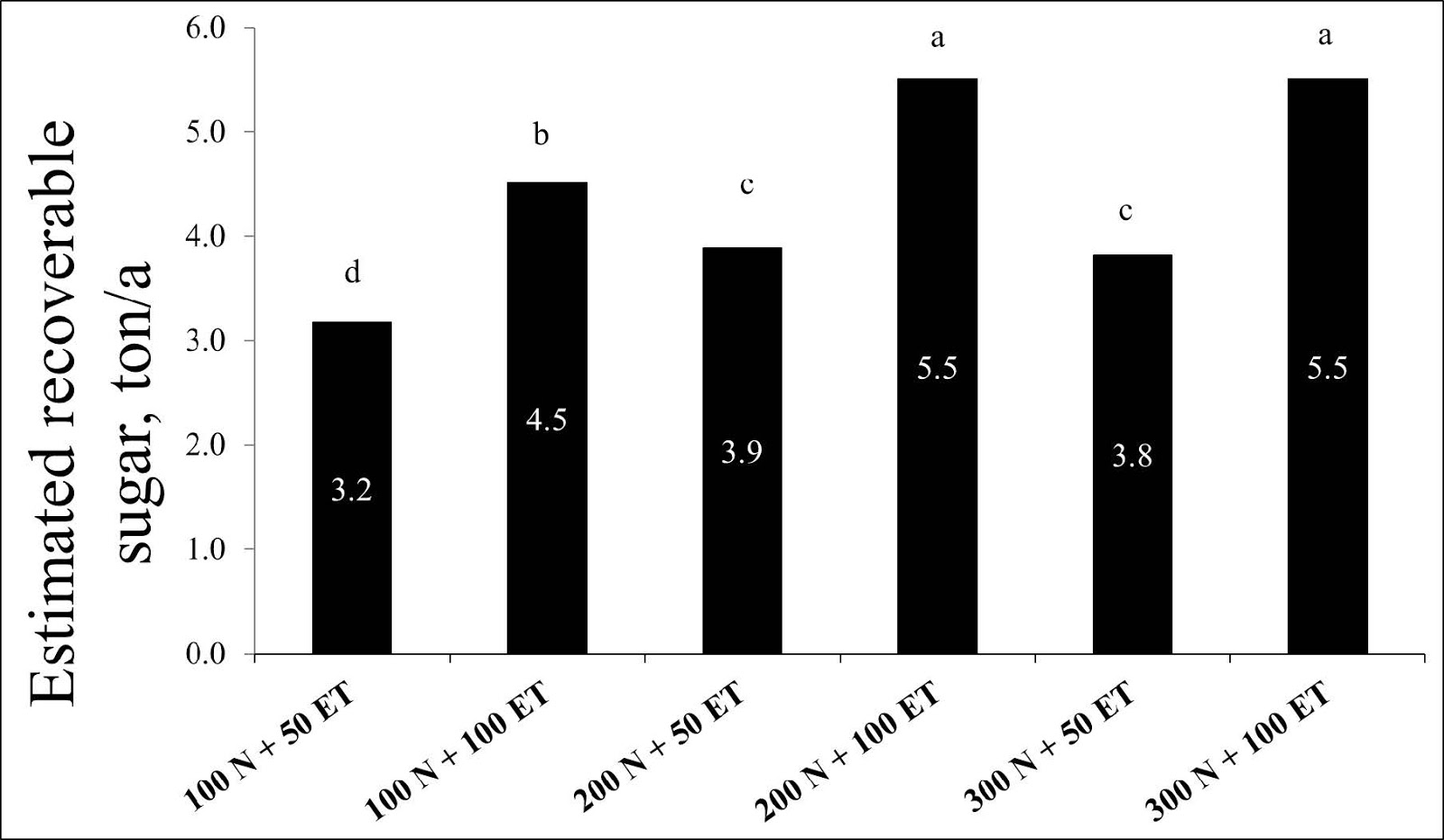
Estimated recoverable sugar (combination of sugar beet root yield and sugar content) was maximized with 200 N + 100 ET; as with yield, increasing N rate to 300 kg ha-1 did not further enhance estimated recoverable sugar.
Early season biomass N content and plant height was strongly positively correlated with sugar content.

January 27, 2020
Grower Surveys: Corn, Potatoes, Small Grains
Stacking and
Intersecting Nutrient and Irrigation 4R’s

Matt Yost1, Neil Hansen2, Grant
Cardon1, Bryan Hopkins2, Olga Walsh4, Brent
Black1, Jared Williams3, and Howard Neibling4
1Utah
State University, 2Brigham
Young University, 3Brigham
Young University-Idaho, and 4University
of Idaho
OBJECTIVES: i) conduct statewide and local surveys of major producers in Idaho and Utah
to quantify adoption rates of nutrient and irrigation 4R’s, barriers to
adoption, and impacts of the proposed work and ii) conduct on-farm experiments to
identify how individual and ‘stacked’ nutrient and water-related 4R’s (irrigation,
crop genetics, and crop management) increase crop profit and optimize nutrient
and water use at three sites in Utah (Logan, Payson, and Santaquin) and four in
Idaho (Grace, Rexburg, Parma, and Twin Falls). Dynamic outreach components will
include interactive field days at the seven research sites, presentations and
publications through Idaho and Utah Extension and professional associations,
and new curriculum and training for students at four Universities.
GROWERS ARE ENCOURAGED TO PARTICIPATE IN 15 MIN SURVEYS
TAKE SURVEY VIA COMPUTER:
CORN Nitrogen and Irrigation SURVEY
POTATOES Nitrogen and Irrigation SURVEY
SMALL GRAINS Nitrogen and Irrigation SURVEY
TAKE SURVEY VIA SMARTPHONE:
Simply point your smartphone camera to the QR codes below and you will be taken to the online surveys.


TAKE SURVEY VIA COMPUTER:
CORN Nitrogen and Irrigation SURVEY
POTATOES Nitrogen and Irrigation SURVEY
SMALL GRAINS Nitrogen and Irrigation SURVEY
TAKE SURVEY VIA SMARTPHONE:
Simply point your smartphone camera to the QR codes below and you will be taken to the online surveys.


January 13, 2020

January 08, 2020
Drones effective tools for fruit farmers
American Society of Agronomy
5585 Guilford Road • Madison, WI 53711-5801 • 608-273-8080 • Fax 608-273-2021
www.agronomy.org
Twitter | Facebook | RSS News Release Feed
5585 Guilford Road • Madison, WI 53711-5801 • 608-273-8080 • Fax 608-273-2021
www.agronomy.org
Twitter | Facebook | RSS News Release Feed
NEWS RELEASE
Contact: Susan V. Fisk, Public Relations Director, 608-273-8091, sfisk@sciencesocieties.org
Contact: Susan V. Fisk, Public Relations Director, 608-273-8091, sfisk@sciencesocieties.org
Drones effective tools for fruit farmers
January 8, 2020 – People have used the phrase “drone on and on” for a long time. Webster’s dictionary defines this figure of speech as “to speak for a long time in a dull voice without saying anything interesting.”
Yet, in agriculture, drones aren’t dull, at all!
Farmers use drones to be more efficient. Drones help farmers improve yields and stay ahead of problems before they become too big.
Olga Walsh, University of Idaho, is researching the use of drones for fruit trees. Most of the agricultural applications for drones - or, more technically unmanned aerial vehicles (UAV) - have been on grain crops like wheat, corn and soy.
“Adoption and use of crop sensors in production agriculture saves thousands of dollars every year in many crops,” says Walsh. “Crop sensors also help to significantly improve the efficiency of agricultural inputs, such as fertilizers and water. Finally, drones can minimize negative impacts of agricultural activities on environmental quality.”
In Idaho, the fruit industry grows grapes, cranberries, apples, and even alternative fruits like Asian pears. Apples are the largest fruit crop in Idaho, with over 60 million pounds of apples produced per year.1
Walsh’s research team focused on applying UAV technology to fruit trees. Her previous work has been with wheat and other crops. “We know drones can be used in orchards,” says Walsh. “But there aren’t any grower recommendations regarding what data needs to be collected and what kind of data is most useful, depending on the grower objective.”
The most promising ways the drones could be employed for the orchards and tree nurseries are:
- taking inventory of tree height and canopy volume;
- monitoring tree health and quality;
- managing water, nutrients, pests and disease in-season;
- estimating fruit/nut production and yield; and,
- creating marketing tools (videos for promotion of the orchard, or sale of trees and fruit).
Like with other uses of drones in agriculture, Walsh’s work helps to collect detailed information about the crops, faster than humans could by physically “scouting” the fields. “The UAVs are capable of acquiring images with high resolutions that are ideal for detecting various crop issues,” says Walsh. “The UAV systems allow scanning the crops from above. They obtain high quality images and high-resolution spectral data. This is correlated with plant growth, health, water and nutrient status, and can be used to estimate biomass production.” All are indicators of potential yield.
It’s not just about the speed of scouting a field. “Sensors can function within regions of the electromagnetic spectrum where human eyes can’t,” says Walsh. “Sensors are much more reliable and objective than visual assessment. They provide quantitative information (numeric data that can be measured and compared) versus qualitative information (descriptive data that can be observed).”
Team members also perform outreach. “We conduct grower education on the use of remote sensing and using UAVs for crop monitoring,” says Walsh. “We do demonstration flights and produce publications to boost grower adoption of precision agriculture methods.”
“The overall goal of this work is to strengthen sustainability and competitiveness of Idaho fruit tree producers,” says Walsh. “Our findings increased awareness, knowledge, and adoption of crop sensors and UAVs.”
And, that’s not dull at all!
Walsh presented her work at the November International Annual Meeting of the American Society of Agronomy, Crop Science Society of America, and Soil Science Society of America in San Antonio. Funding for this project came from the Idaho State Department of Agriculture Nursery Advisory and Florist Advisory Committee.


May 17, 2019
Understanding Factors Controlling Ammonia Volatilization from Fertilizer Nitrogen Applications.
Biswanath Dari, Christopher W. Rogers, and Olga S. Walsh


Best Management Practices to Minimize Ammonia Volatilization Losses from Fertilizer Nitrogen Applications.
Christopher W. Rogers, Biswanath Dari, and Olga S. Walsh


Sugar Beets Research Update
Nitrogen and
Water Management for Optimized Sugar Beet Yield and Sugar Content
Principal Researchers: Olga
Walsh and Sanaz Shafian
Affiliation: Olga
Walsh, University of Idaho
Address:
29603 U of I Lane, Parma ID 83660; (208) 291-6218
Principal Contact Email:
owalsh@uidaho.edu
We are grateful to the Snake River Sugarbeet Research and Seed Alliance LLC and the Amalgamated Sugar Company for funding and supporting this project.


Sugar beet (SB) production profitability
is based on maximizing three parameters: beet yield, sucrose content, and
sucrose recovery efficiency. Efficient nitrogen (N) and water management are
key for successful SB production. Nitrogen deficits in the soil can reduce root
and sugar yield. Overapplication of N can reduce sucrose content and increase
nitrate impurities which lowers sucrose recovery. Application of N in excess of
SB crop need leads to vigorous canopy growth, while compromising root
development and sugar production. Changes in SB varieties and management
practices warrant re-evaluation of N management. TASCO and the USDA-ARS found
that in 60% of evaluated SB fields, application of N did not increase sucrose
yield. This suggests that residual soil N from past applications and in-season
N mineralization was adequate and indicates that growers could maximize sugar
yield and save money by applying less N. Due to recommendation to have all N
applied and plant-available by 4-6 leaves, it is imperative to determine the appropriate
N application rates for N responsive fields early in the season. Appropriate
irrigation amount and timing can optimize SB yields while minimizing disease
pressure, water costs and N leaching. Excessive irrigation can increase SB root
weight, but lower sugar content. Defining the optimum water and N fertilizer
levels should be done on a regional basis, utilizing locally grown varieties and
taking into account local management practices. Remote sensing is a promising
tool for in-season N and water management and in-season prediction of SB yield
and quality, which in turn can improve the economic returns to SB growers and
processors. Crop sensors can accurately measure SB biomass production and top N
content. Spectral indices are correlated
with N rates applied to SB can be used for in-season prediction of SB yield and
quality and to make N management decisions.
List of
Objectives
The goal is to improve water and N use
efficiency for agronomically, economically, and environmentally sustainable SB
production by combining traditional and novel, state-of-the-art methodologies.
1. To analyze the effects of water and N
fertilizer rates on SB yield and quality,
2. To explore the potential of using
ground- and aerial-based (UAVs) data for SB N and water content monitoring,
3. To access the feasibility of
predicting SB root yield and recoverable sugar using hand-held and UAV-based
sensors, and
4. To conduct extension outreach focused
on water and nutrient management in SB, remote sensing, and UAV use for crop
monitoring.
Sugar beet planting, April 18, 2019


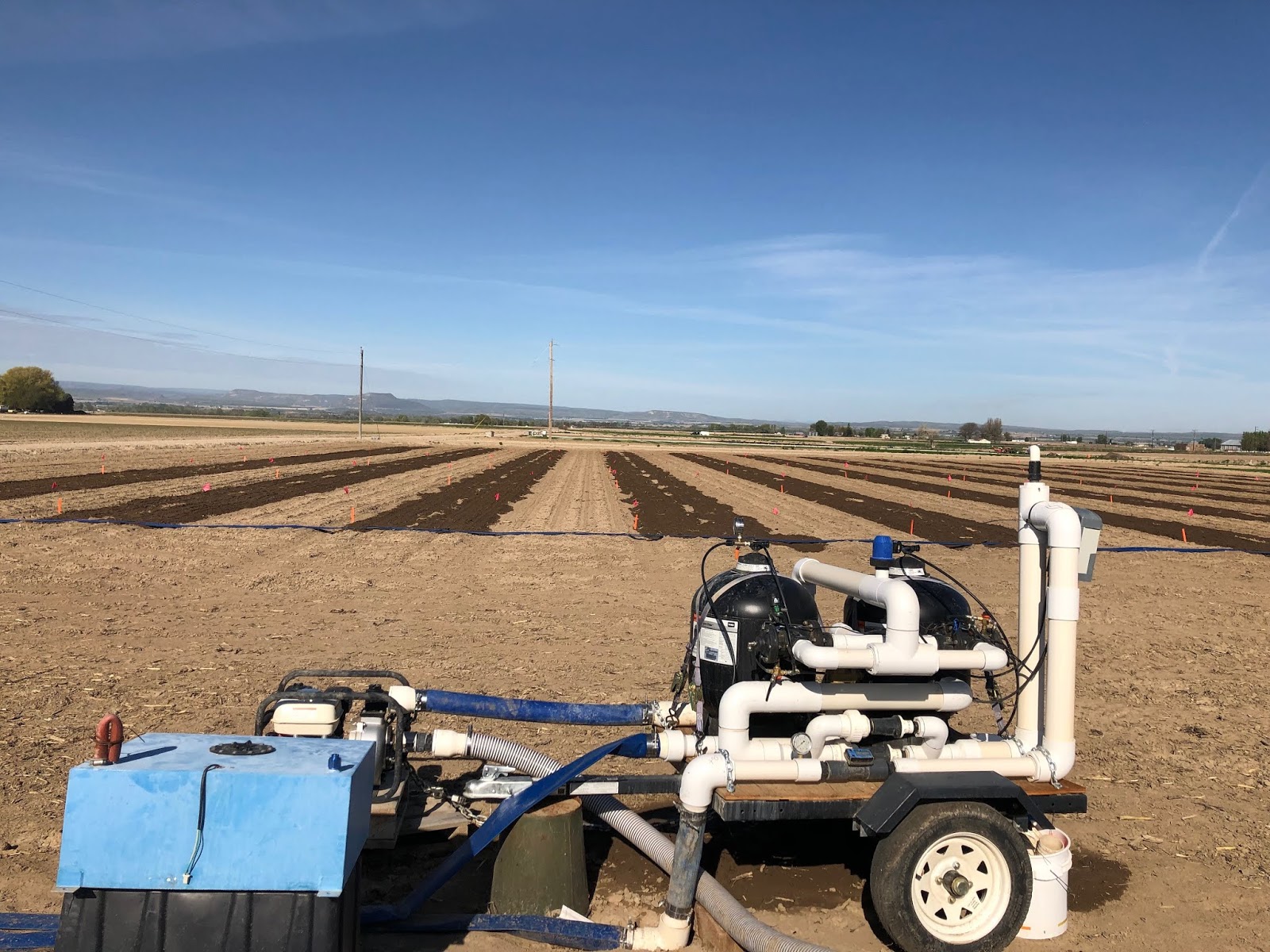
Irrigating the research plots using the subsurface drip irrigation system, April 25, 2019

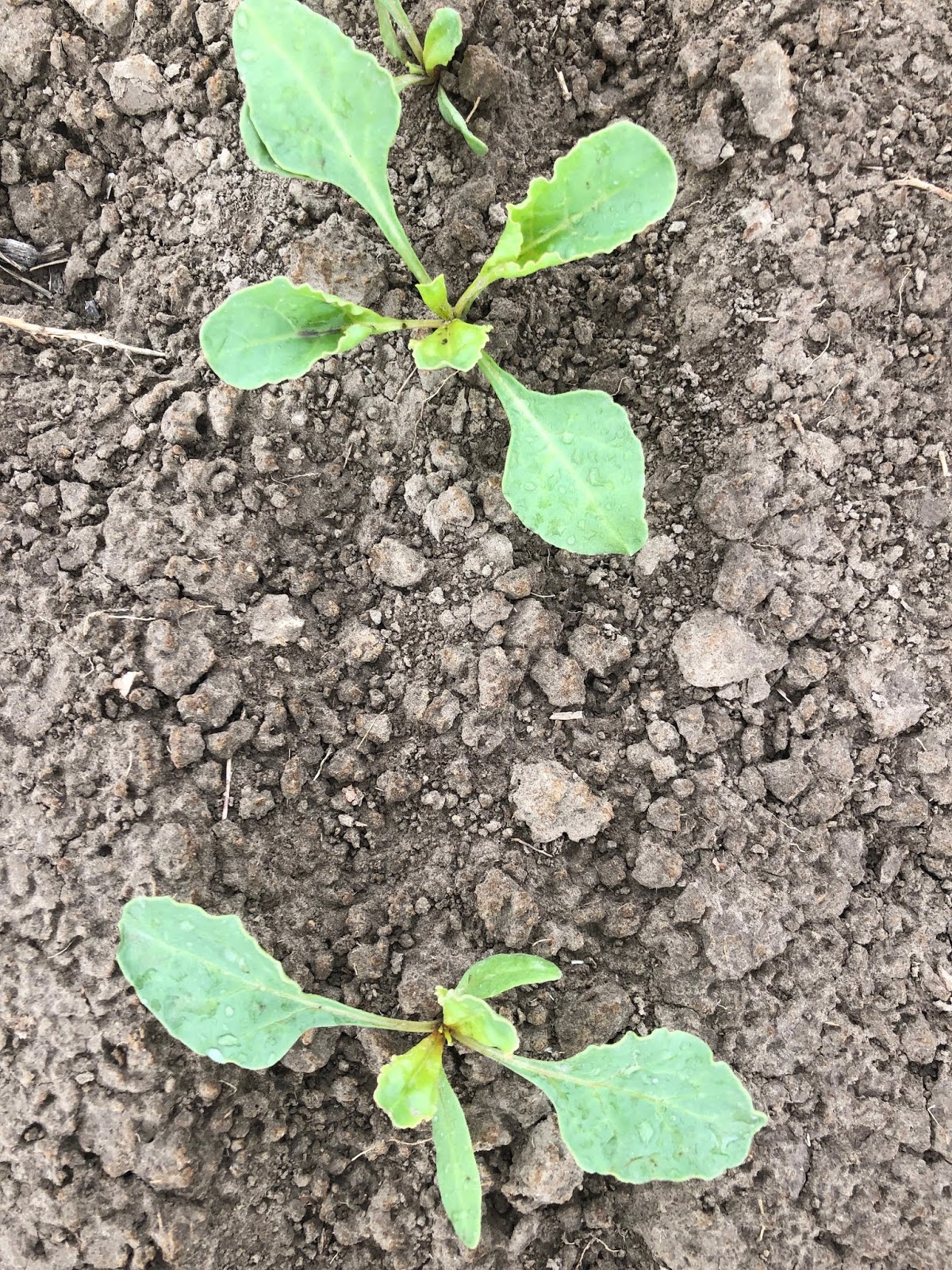
Sugar beets emergence, April 26, 2019


Water treatment differences, May 16, 2019:
100% water applied; 12 h set


50 % water applied; 6 h set

Subscribe to:
Posts (Atom)