October 21, 2021

Drought Severity: Trends and Management


DROUGHT SEVERITY: TRENDS AND MANAGEMENT

Ritika Lamichhane and Olga S. Walsh

Department of Plant Sciences, University of Idaho, Parma R&E Center

Drought is simply a prolonged period of water shortage. Drought can be caused by deficiency of water supply, increase in water demand, or both. Drought starts with less than usual precipitation and its persistence results in a decline in reservoir levels, river flow, and ground water levels. Agricultural drought occurs when the amount of soil moisture no longer meets the crop demand. The severity of drought depends on the degree of moisture deficiency, the duration, and the size of affected area. Drought can have tremendous negative effects on agricultural sector since it reduces both water availability and quality for farming. This significantly impacts the agricultural productivity.




2021 Idaho Hops Virtual Field Day


  • UI Entomologist Justin Clements provides an overview of topics covered at this year’s virtual hops field day.
  • Current and New Pesticide Technologies
  • USDA Hops Genetics and Breeding
  • Hops Entomology Research
  • Hops Plant Pathology and Diagnostics
  • Hops Agronomy

September 15, 2021

Varietal Response of Wheat and Barley to Nitrogen


The University of Idaho researchers and extension specialists are collaborating on a state-wide project to support the development and adoption of technologies that transform nutrients in dairy manure into commercial fertilizers and manure-based bioproducts. Updating nutrient management recommendations for Idaho crops (including wheat and barley) and evaluating the long-term effects of nitrogen fertilizers and newly developed manure-based bioproducts on soil carbon, nitrogen, and phosphorus levels plus soil health (e.g., microbial biomass, organic matter content, and soil carbon content) are among the key objectives.

READ MORE HERE


Teff is a reliable low-risk crop. It is relatively resistant to biotic and abiotic stresses and can be grown under moisture stress or waterlogged conditions. Its short production cycle makes it useful as a rescue or catch crop in areas with limited water availability when perennials have failed. Growing teff as a double crop, green manure crop, cover crop or even an emergency crop when the unfavorable weather conditions delays planting of other grain crops is an excellent option. Teff is often grown as an economically viable rotational crop that’s compatible with a variety of commodity crops.

Though teff has been successfully grown in Idaho since the 1980s, more research and education on its breeding and management are needed. Mechanization is required to minimize grain loss at harvest and handling. The Cropping Systems Agronomy program at the University of Idaho, Parma, is excited about future collaborative research focusing on nutrient and water management for teff, as well as variety evaluation.

August 25, 2021

Recap of the 2021 WSCS meeting


The Western Society of Crop Science (WSCS) is a CSSA branch that comprises the states and provinces of Alaska, Alberta, Arizona, American Samoa, Baja California, Baja California Sur, British Columbia, California, Chihuahua, Colima, Colorado, Durango, Guam, Hawaii, Idaho, Jalisco, Montana, Nayarit, Nevada, New Mexico, Northwest Territories, Oregon, Saskatchewan, Sinaloa, Sonora, Utah, Washington, Wyoming, and Yukon Territory. 

The 2021 WSCS virtual conference took place June 22-23 utilizing Zoom. The theme of the WSCS meeting was the same as that of the 2021 ASA, CSSA, SSSA Annual Meeting “A Creative Economy for Sustainable Development. The meeting was attended by 20 participants from New Mexico State University, Montana State University, University of Wyoming, Washington State University, Brigham Young University, University of Idaho, and Columbia Basin College.

READ MORE HERE


June 15, 2021

All About Drones. Applied Technology


Analyzing data from drones is very time-consuming and requires specific, high-level knowledge of software, even statistics.

“Data analysis is followed by data interpretation—which is, perhaps, the most vital part in the whole process,” says Olga Walsh, research associate professor at the College of Agricultural and Life Sciences at the University of Idaho.

READ MORE HERE.

October 28, 2020

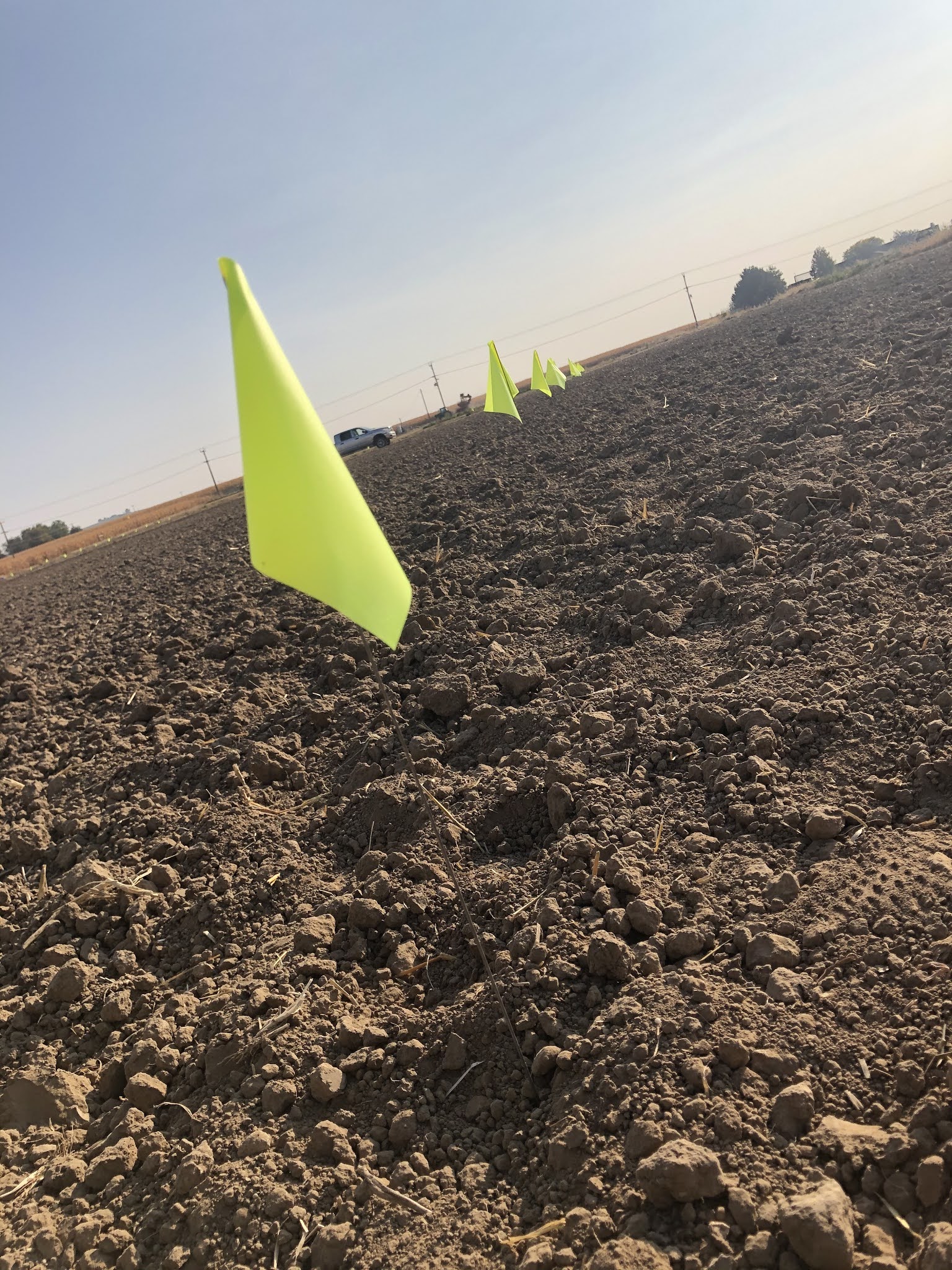
Winter cereals nursery, Parma, ID

Planting: October 7, 2020


Emergence: October 28, 2020